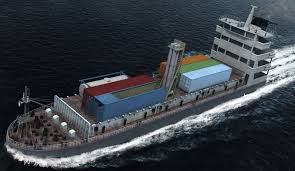
 For the last two years a Russian firm (Morinformsystem-Agat JSC) has been marketing a version of the Klub cruise missile that can be carried in a 40 foot (12.9 meter) shipping container. Called “Pandora’s Box”, the launcher and the missile have to slide out of the container before firing, thus limiting where it can be placed on a ship, particularly your typical container ship. Recently the manufacturer announced another version of this system with a smaller, slower, and presumably cheaper cruise missile. This unidentified weapon is described as weighing 520 kg (half a ton), having a 145 kg (319 pound) warhead, and being 3.8 meters (11.8 feet) long. Max range is 130 kilometers.
What worries counter-terrorism officials is that you could get many of these shipping container missiles on most cargo ships, turning the vessel into a warship. The shipping container can also be hauled around (like many such containers are) via truck or rail car and used to surprise someone you don’t like.
The system is all in one shipping container, which is equipped with four missiles, in sealed shipping/firing containers. Also in the container are communications and targeting equipment which the two man crew uses to program the missiles, operate the hydraulic system to raise the missiles, and fire them. The entire container is waterproof and contains a satellite link for receiving target data, or whatever.
The first version of Pandora's Box used the 3M54 Klub missile. This weapon was originally designed for the Kilo submarine. Each Klub weighs two tons, can be fired from a 533mm (21 inch) torpedo tube, and has a 200 kg (440 pound) warhead. The anti-ship version has a range of 300 kilometers and moves at up to 3,000 kilometers an hour during its last minute or so of flight. There is also an air launched and ship launched version (which is used in Pandora's Box). A land attack version does away with the high speed final approach feature and has a 400 kg (880 pound) warhead.
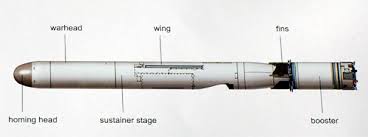
What makes the anti-ship version of the 3M54 particularly dangerous is its final approach, which begins when the missile is about 15 kilometers from its target. Up to that point the missile travels at an altitude of about 32 meters (hundred feet). This makes the missile more difficult to detect. The "high speed approach" (via the use of additional rockets) means that it covers that last fifteen kilometers in less than twenty seconds. This makes it difficult for current anti-missile weapons to take it down.
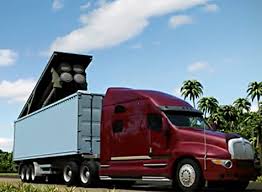
It’s unusual for a firm to offer something like Pandora's Box, which is designed for concealed transport on a merchant ship, truck, or rail car. So far none of the buyers have been identified. The manufacturer says there have been many inquiries from foreign nations (none were identified). While these missiles are of questionable effectiveness in wartime, they would likely be much more potent if used for a surprise attack on a military or civilian target. Estimated price for each cargo container of Klubs is about $6 million. The new version probably goes for less than $4 million per container. The fact that Pandora's Box is still being offered for sale after two years, and has just been upgraded, indicates that someone is buying, but who?


